TEON
The Tahoe Environmental Observatory Network (TEON)
The goal of the Tahoe Environmental Observatory Network (TEON) is to provide a scientific foundation of data on environmental conditions that may change with a shifting climate. The recommended design includes forest and aquatic ecosystems and the interface among these habitats (e.g., meadows and riparian areas). Our focus to date has been on ecological pillars of resilience, but our framework will ideally encompass social, cultural, and economic aspects of the basin’s ecosystems over time.
The Lake Tahoe basin is 1,310 square kilometers (approximately 205,000 acres) of forest, meadow, streams, and chaparral dominated by federal and state public lands, creating a unique management collective within a tourism-driven economy. The USFS-LTBMU manages ~75% this area, which receives well over 15 million visitors each year.
Basin-wide monitoring is intended to provide a foundational understanding of the status and change of key metrics of ecosystem condition. The combination of remotely sensed data and representative field sample sites is designed to generate unbiased status and trend data across the basin over time. This type of retrospective monitoring (surveillance monitoring, i.e., building a time-series of conditions) informs the types and locations of change and generates hypotheses about drivers of change that may inform management.
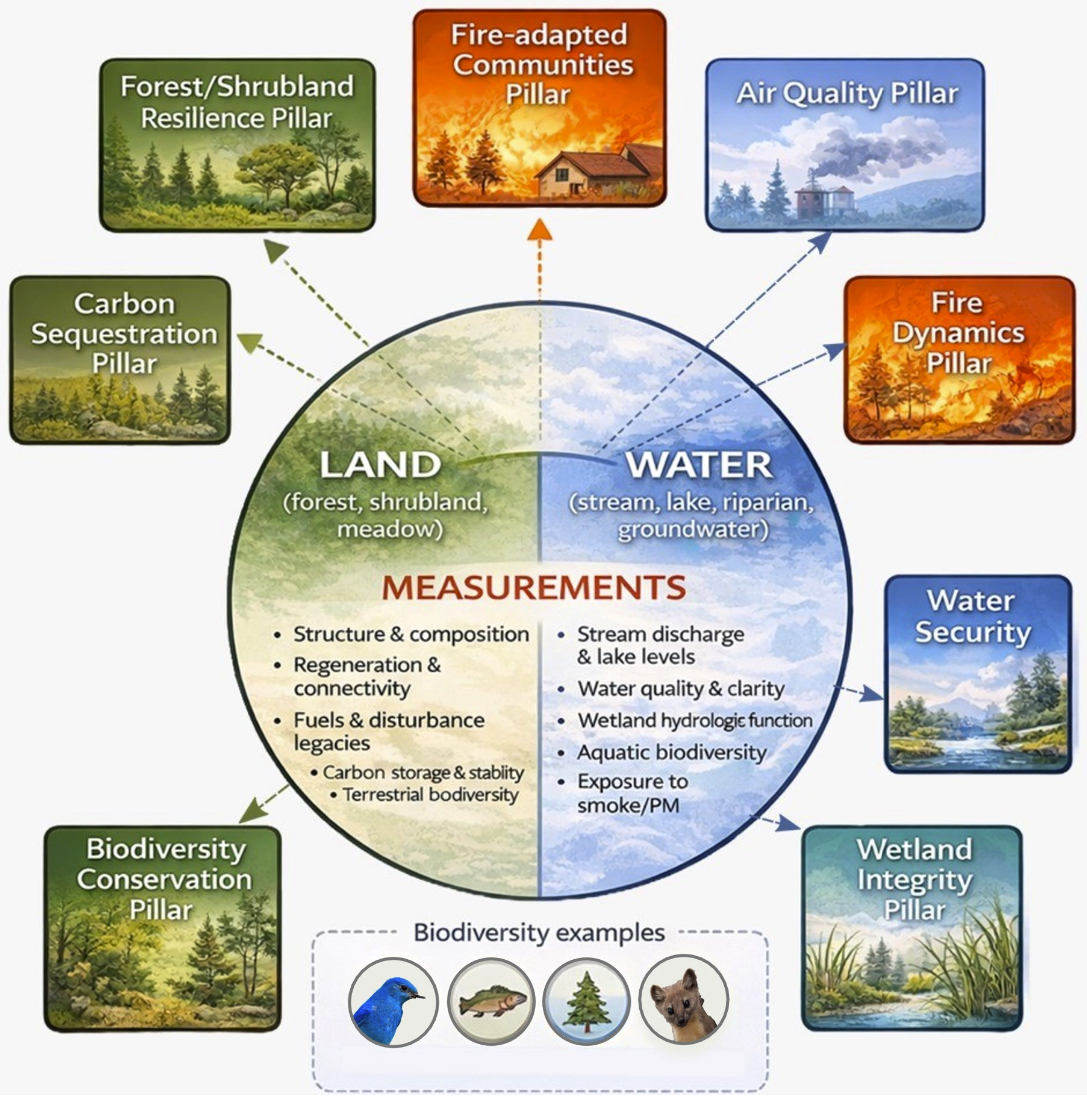
For a more in-depth overview of the TEON project, explore our story map by CLICKING HERE.
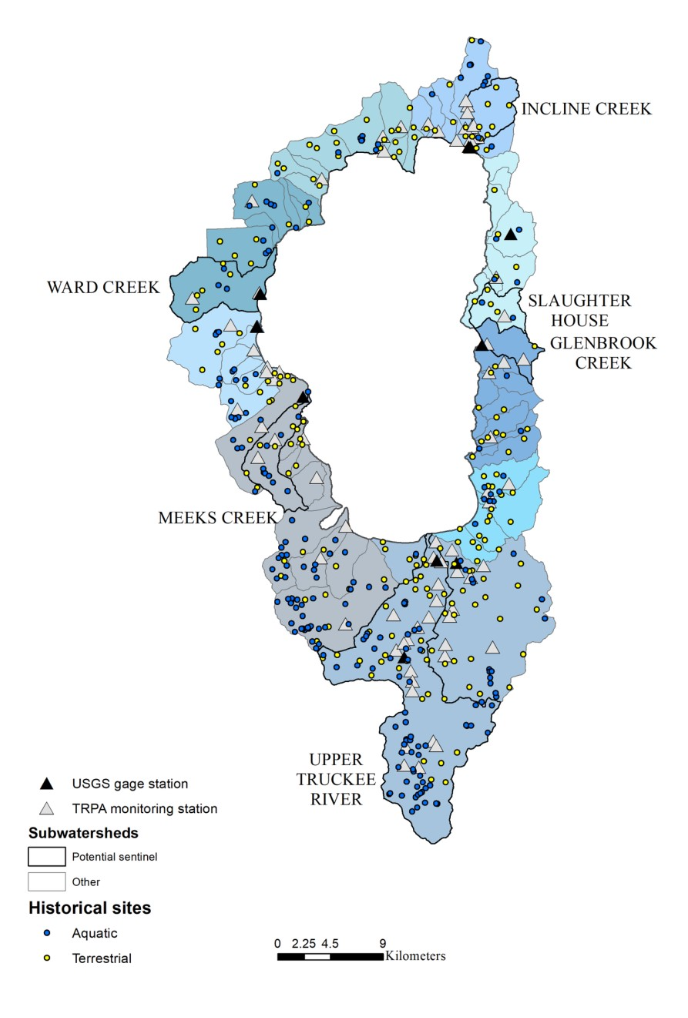
Sentinel watersheds are designed to provide a more in-depth understanding of directions, drivers, and consequences of change and the process-based linkages among resources within and across watersheds. Monitoring that is focused on key cause-and-effect relationships in areas of expected change complements broad-scale surveillance monitoring by providing this finer-scale context.